
Skills & Personal Development
AUTHOR: Bewise-Admin


India produces hundreds of thousands of graduates every year who can solve differential equations, write legal briefs, and debug code. But most of them arrive at their first job without knowing how an EMI is calculated, what a credit score is, or why the interest rate on a personal loan matter. This is not a gap in intelligence. It is a gap in what we decided to teach.
And the consequences are real. Financial decisions such as whether to take an education loan, how to allocate a first salary, whether a scholarship actually covers all costs of studying abroad arrive early and carry long-term weight. Students are expected to navigate them with no preparation. That needs to change.
The standard explanation is that schools have enough to cover, and financial literacy is "practical knowledge" rather than academic content. There is some truth in this as curriculum space is genuinely finite, and financial topics do not map neatly onto existing subject boundaries.
But the deeper reason is that we have historically defined educational success too narrowly. If the goal is examination performance, financial literacy does not contribute to it. It does not appear on board papers, and it does not improve rankings. So, it gets left out.
The problem is that this definition of success stops at graduation. What happens after whether a student can sustain the career they worked for, avoid debt traps, make sound investment decisions, or weather financial shocks - is treated as someone else's problem. It should not be.
Financial literacy is frequently misunderstood as being about money management tips - spending less, saving more. That framing undersells it significantly.

At its core, financial literacy is about understanding systems. Specifically:
Credit and debt – How interest compounds, what happens when you miss an EMI, why a credit score affects loan eligibility and interest rates, and how to read about a loan agreement before signing one. Education loans in India now routinely run to ₹15–20 lakh for postgraduate programs. A student who does not understand the repayment structure is making a multi-year financial commitment without informed consent.
Budgeting and cash flow – Most first-year professionals underestimate fixed costs – rent, transport, health expenses and overestimate discretionary income. The result is a month-end crunch that leads to credit card debt, which compounds quickly.
Basic investing – The difference between a savings account returning 3.5% and an index fund returning 10–12% over a decade is not theoretical. It is the difference between a corpus and a shortfall at 45. But the logic of compound returns, tax-advantaged instruments like PPF and ELSS, and the concept of risk-adjusted returns are almost never taught formally.
Understanding contracts and financial documents – Offer letters, rental agreements, insurance policies, and bank terms and conditions all contain consequential information that most young adults either do not read or cannot interpret. This is a literacy problem as much as a financial one.
The OECD's research on financial literacy consistently finds that individuals with higher financial literacy are better positioned to plan for the long term, manage debt responsibly, and avoid high-cost financial products. In developing economies where formal financial safety nets are weaker, and predatory lending is more prevalent – this matters even more.
Students who aspire to study abroad face a version of this problem that is particularly consequential.
Scholarships, whether partial or full, are frequently misunderstood as solving the financial equation. In reality, most scholarships cover tuition and sometimes accommodation. They rarely account for health insurance (often mandatory and expensive), visa fees, flights, course materials, local transport, food, and the exchange rate buffer needed when the rupee moves against the host country's currency.
A student admitted to a program in the UK or Germany with a partial scholarship may face living costs of ₹8–12 lakh per year beyond what the scholarship covers. Without a clear-eyed financial plan, including understanding loan options, repayment timelines, and the earning trajectory in their target field, they can arrive at an excellent institution and spend the first semester in financial stress.

Financial literacy does not make studying abroad unaffordable. It makes the decision honest. Students who understand the full picture can plan better, negotiate more effectively, and choose programs that align with their actual financial situation rather than just their aspirations.
The structural barriers are real, and worth naming:
No standardized curriculum – Unlike mathematics or history, there is no agreed national framework for what financial literacy should include at each level. This makes it difficult to assess, and therefore easy to deprioritize.
Undertrained faculty – Most teachers are not trained in personal finance. Teaching it credibly requires comfort with concepts that sit outside standard subject preparation.
Exam-orientation – As long as board and entrance exam performance defines institutional reputation, subjects that do not contribute to those scores will struggle for curriculum space.
Perceived class-specificity – There is an implicit assumption, rarely stated openly, that financial literacy is more relevant for students from lower-income households, and that students from wealthier backgrounds will learn it at home. This is empirically wrong. Financial mismanagement crosses income levels, and the consequences of bad decisions scale with the size of the money involved.
None of these barriers are insurmountable. Several states have begun integrating financial literacy into school curricula, and SEBI's Investor Education program has produced classroom-ready materials for secondary students. The infrastructure exists. What is missing is the institutional will to treat this as essential rather than supplementary.
The goal is not a one-hour workshop on "saving tips." Meaningful financial literacy education requires:
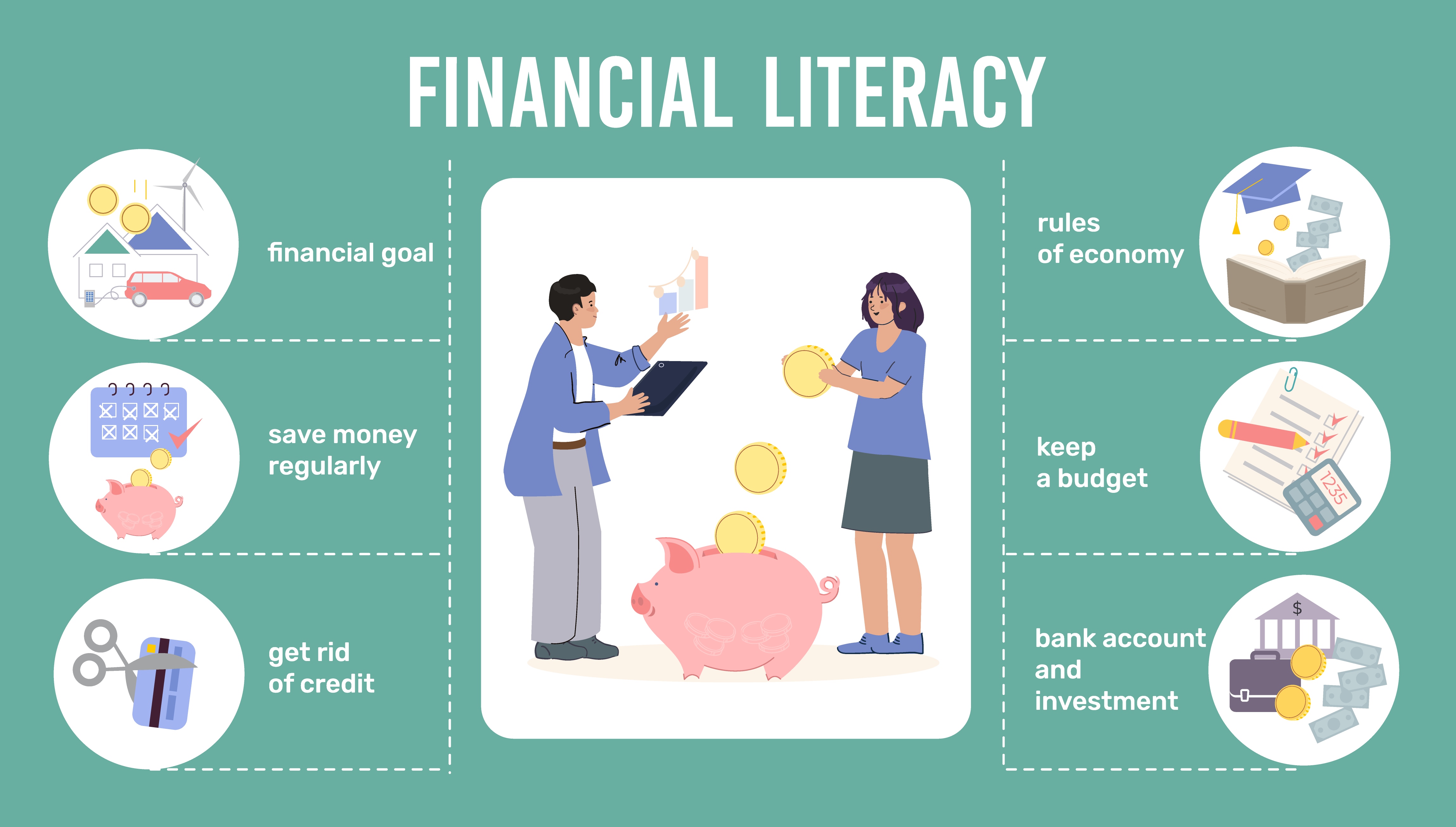
Integration across years, not a single module – From teaching simple budgeting in middle school, credit and interest in secondary school, to investment basics and tax fundamentals in senior secondary and early college - financial concepts should be introduced progressively.
Application-based learning - Students should work with real numbers - simulating a monthly budget on a starting salary, calculating the total cost of a loan at different interest rates, comparing financial products. Theory without practice produces the same passive understanding that plagued early edtech.
Context-appropriate content – The financial decisions facing a student from a rural family taking an education loan are different from those facing a student from an urban household investing a portion of their first salary. Good financial literacy education acknowledges this variation rather than offering a generic middle-class syllabus.
Taught by experts – This may require bringing in practitioners such as chartered accountants, financial planners, experienced educators with relevant backgrounds alongside or instead of repurposing existing faculty.
Consider two graduates who leave the same institution with the same degree and join companies paying the same salary of ₹8 lakh per annum. By the time they are 35:
One has an emergency fund covering six months of expenses, has been investing ₹5,000 per month in an index fund since year two, has no high-interest debt, and has a credit score above 750.
The other has a personal loan taken out in year three to cover an unexpected expense (because there was no emergency fund), is paying credit card interest at 36% annually, and has not started investing because there never seems to be enough left at the end of the month.
The gap between these outcomes is not income. It is knowledge. Specifically, the knowledge of how money works is applied early enough to matter.
This is not a hypothetical situation. It is the pattern that financial advisors describe as typical for first-generation earners in India who received no financial education. The good news is that it is entirely preventable. The knowledge required is not complex. It simply needs to be taught.
The path forward is not difficult to describe, even if it requires effort to be executed.
Financial literacy needs to be included in the formal curriculum. Not as an elective, not as an after-school program, but as a core component of schooling, assessed and sequenced like any other subject. The NEP 2020 framework explicitly includes financial literacy as part of vocational and life skills education; what is needed now is implementation with the same seriousness applied to core academics.
Higher education institutions, particularly those whose graduates face immediate high-stakes financial decisions, like medical colleges, law schools, and management programs should treat it as an induction requirement, not a cultural enrichment option.
And parents, educators, and students themselves can begin now. Resources from SEBI, RBI's consumer education initiatives, and organizations like IDFC FIRST Academy's financial literacy programs are freely available. The formal system catching up is necessary; waiting for it is not.
Financial literacy is not a luxury subject for students who have time after covering the real curriculum. It is part of the real curriculum.
Sources: OECD Global Financial Literacy Excellence Centre;
National Endowment for Financial Education (NEFE) - Research on Youth Financial Education;
SEBI Investor Education Program;
Ministry of Education - National Education Policy 2020;
RBI Consumer Education Initiatives
1. At what age should financial literacy education begin?
Ideally, progressively from middle school onwards. It should be introduced not as a single module, but as a thread running through secondary and senior secondary education. Simple budgeting and saving concepts can be introduced at age 11–12; credit, interest, and investment basics from 14–16; and tax, insurance, and financial planning in senior secondary and early college years.
2. Is financial literacy only relevant for students from lower-income households?
No, and this is a common misconception worth challenging directly. Financial mismanagement is not income dependent. The consequences of poor decisions scale with the size of the money involved. Students from higher-income households often face larger financial decisions earlier, with equally limited preparation.
3. Why do most students arrive at their first job without any financial knowledge?
Primarily because financial literacy is not part of the formal examined curriculum in most Indian schools and colleges. Without exam weight, it does not compete effectively for curriculum time, teacher training, or institutional attention.
4. What is the most important financial concept for a first-year professional to understand?
Compound interest. Both its power when it works for you (investing early) and its cost when it works against you (high-interest debt). Understanding this one concept changes how people think about saving, borrowing, and time.
5. Are there free resources for students who want to learn financial literacy now?
Yes. SEBI's Investor Education program, RBI's consumer education resources, and the National Centre for Financial Education (NCFE) all offer free, India-specific financial literacy content suitable for students and young professionals.

Blogs


© Copyright 2023 BeWise & Wisdom Tech Solutions. All Rights Reserved. BeWise College Campus is an initiative of Wisdom Tech Solutions Pvt Ltd focused on entrepreneurship and innovation programs for higher education institutions.