
Student Life & Well-being
AUTHOR: Bewise-Admin


Most students arrive at college expecting things to finally make sense.
They anticipate clarity about careers, confidence about the future, maybe even a sense of direction that school never quite provided. What many find instead is the opposite - confusion, pressure, and a strange, persistent feeling of falling behind without knowing who they're falling behind to.
More students feel this way than most people admit. Because college today is no longer just about academics. It's a phase where students are simultaneously trying to figure out identity, ambition, relationships, career direction, financial pressure, and what kind of future they actually want – all at once, usually around the age of eighteen or nineteen.
That's an enormous amount to process.
One of the primary reasons students feel lost is the expectation that they should already know what they want. The questions come constantly: What are your career goals? What will you specialize in? What job do you want? Where do you see yourself in five years?
.jpg)
The problem is that most students are still in the middle of discovering themselves. But rather than feeling free to explore, they feel pressure to appear certain to perform confidence they don't yet have.
The American College Health Association has documented rising levels of stress, anxiety, and career-related uncertainty among college students globally. And social media amplifies all of it.
This is where the emotional disconnect deepens.
Students scroll through platforms where everyone appears productive, purposeful, and ahead. Someone is launching a startup. Someone else just landed a competitive internship. Another is studying abroad, building a side business, or winning a national competition.
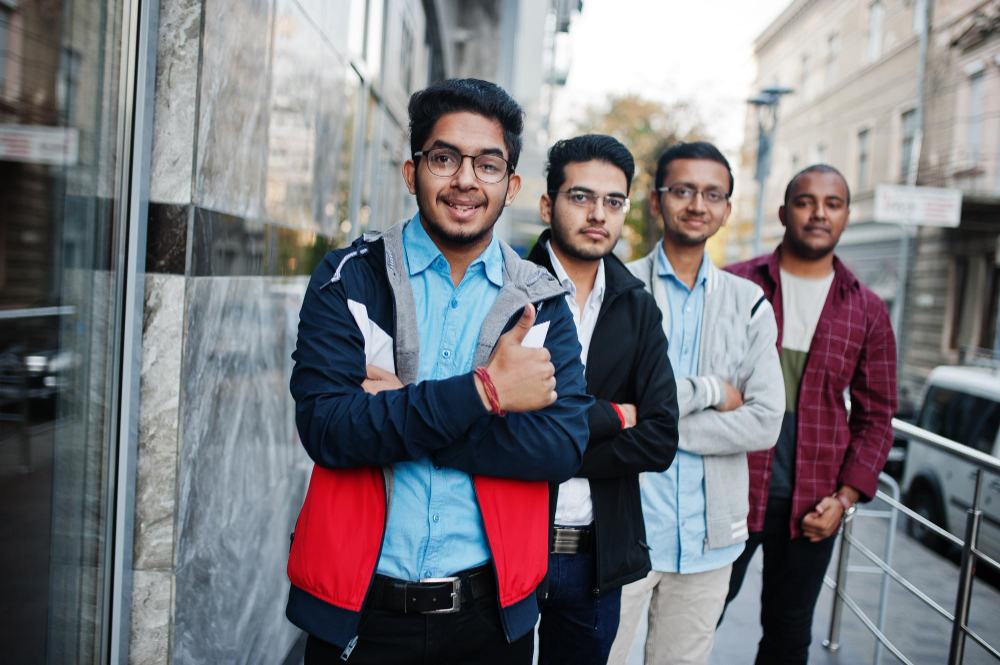
Meanwhile, most students are just trying to stay on top of assignments.
It becomes exhausting. And gradually, students begin to believe they are uniquely lost, that everyone else has worked something out that they haven't. They haven't. The curated version of college life that social media projects is, by design, unrepresentative.
Most institutions still center heavily on academic delivery while students quietly wrestle with larger questions: What am I actually good at? What kind of work would I find meaningful? What skills genuinely matter in the job market today? What if I chose the wrong course?

This is why conversations around career guidance after 12th cannot simply stop once students enter college. Career clarity isn't a one-time decision made at seventeen. It develops through exposure, experience, and iteration, and that process takes time.
Many students feel lost not because something is wrong with them, but because their world has remained too narrow for too long.
They attend lectures, complete assignments, and sit exams, but they rarely get a meaningful look at how industries, workplaces, and careers actually function from the inside. Without that exposure, it's genuinely difficult to connect education to the real world, or to develop any instinct about where one might fit.
This is why internships for college students in India, industry projects, mentorship programmes, and professional networking events matter as much as they do. Exposure creates clarity far faster than overthinking ever will.
There's another reason uncertainty feels so overwhelming right now. Career paths are no longer linear, and students know it.
They're watching people switch industries entirely, build careers through online platforms, work remotely across geographies, freelance independently, and create opportunities that no traditional placement process would have identified. That fluidity creates genuine opportunity, but it also creates genuine confusion. The "safe" path has become difficult to define because the definition keeps shifting.
This is exactly why employability programs for students and skill-based learning programs matter more than ever. Adaptable, applicable skills serve students better than theoretical qualifications that don't travel well across a changing landscape.
The answer isn't pushing students to make decisions sooner. It's giving them the conditions to explore more freely.
Create space for exploration without pressure. Not every experience needs to lead directly to a career outcome. Volunteering, freelance work, student organizations, and creative projects all build self-knowledge, which is ultimately what career clarity is built from. Letting students learn without fearing mistakes is a precondition for genuine discovery.
Normalize career uncertainty. One of the most useful things colleges can do is facilitate honest conversations about not knowing. When students understand that uncertainty is a normal, even productive part of the process, they stop spending energy hiding it and start using that energy more constructively.

Prioritize skill-building early. Students grow in confidence as they grow in competence. Communication training, real-world projects, leadership experiences, and structured internship pathways for colleges all give students something concrete to build on and something tangible to point to when they face the job market.
Increase industry exposure deliberately. Career awareness often comes after exposure, not before it. When students engage with professionals, alumni, entrepreneurs, and industry mentors, they encounter possibilities they didn't know to look for. The broader a student's exposure, the less boxed in their thinking becomes.
Stop treating success as one fixed formula. Students want different things. Some will pursue corporate careers. Others will build businesses, do creative work, or pursue higher education overseas. Programs like study abroad scholarships, master's abroad scholarships, and semester exchange programs do more than provide educational opportunities. They expand the frame through which students see their own futures. Broadened horizons tend to dissolve fear.
Platforms like CollegeCampus can play a meaningful role in this process by giving students access to career exploration tools, global education pathways, industry exposure, skill development resources, and internships for college students. Because students don't simply need more information, but they need direction, exposure, and the kind of experience that builds genuine confidence.
This is probably the most important thing a lost student needs to hear.
Feeling uncertain during college doesn't mean you're failing. It usually means you're growing up. The students who eventually build meaningful, fulfilling careers are rarely the ones who had everything figured out at eighteen. They're the ones who stayed curious long enough and kept exploring openly enough to discover what actually fits them.
College isn't supposed to provide every answer immediately. Sometimes its real purpose is teaching students to ask better questions.
Because they're under pressure to make career decisions while still figuring out who they are. Social media comparisons, academic stress, and limited real-world exposure combine to amplify uncertainty during a period that is already inherently complex. Feeling lost at this stage is far more common than most students realize.
Through experience rather than contemplation. Internships for college students in India, skill-based learning programs, mentorship, networking, and real-world projects all help students understand which career paths genuinely suit them in ways that classroom learning alone rarely can.
Internships connect academic knowledge to real-world work. They develop communication, problem-solving, and professional confidence while giving students direct insight into industry expectations and career realities before graduation, making the transition out of college significantly less disorienting.
By building structured support around career guidance programs, internship pathways for colleges, skill development workshops, industry exposure opportunities, mental wellness resources, and mentorship networks. Students who have access to these initiatives consistently demonstrate stronger career readiness and greater confidence heading into their professional lives.

Blogs


© Copyright 2023 BeWise & Wisdom Tech Solutions. All Rights Reserved. BeWise College Campus is an initiative of Wisdom Tech Solutions Pvt Ltd focused on entrepreneurship and innovation programs for higher education institutions.