
Skills & Personal Development
AUTHOR: Bewise-Admin


There was a time when asking for help meant waiting.
Waiting after class to catch a professor. Waiting for a doubt-clearing session that may or may not address your specific confusion. Waiting for someone or anyone to explain something at your pace, in your words, without making you feel like you should already know it.
That wait is disappearing.
College students today are using AI tutors not just for quick answers but for something more meaningful by learning faster, revising more effectively, and approaching academic and career decisions with genuine confidence. This isn't about convenience but about control.
And in a world where skill-based learning programs, internships for college students in India, and real-world readiness carry more weight than ever, how students learn is becoming just as consequential as what they learn.
The AI tutor isn't replacing what a professor does. It is filling in what a professor cannot do.
In a typical classroom, a lecture moves at a fixed pace. A concept that doesn't land gets left behind. Questions accumulate in silence because the moment to ask has passed. The student falls slightly further behind and says nothing.
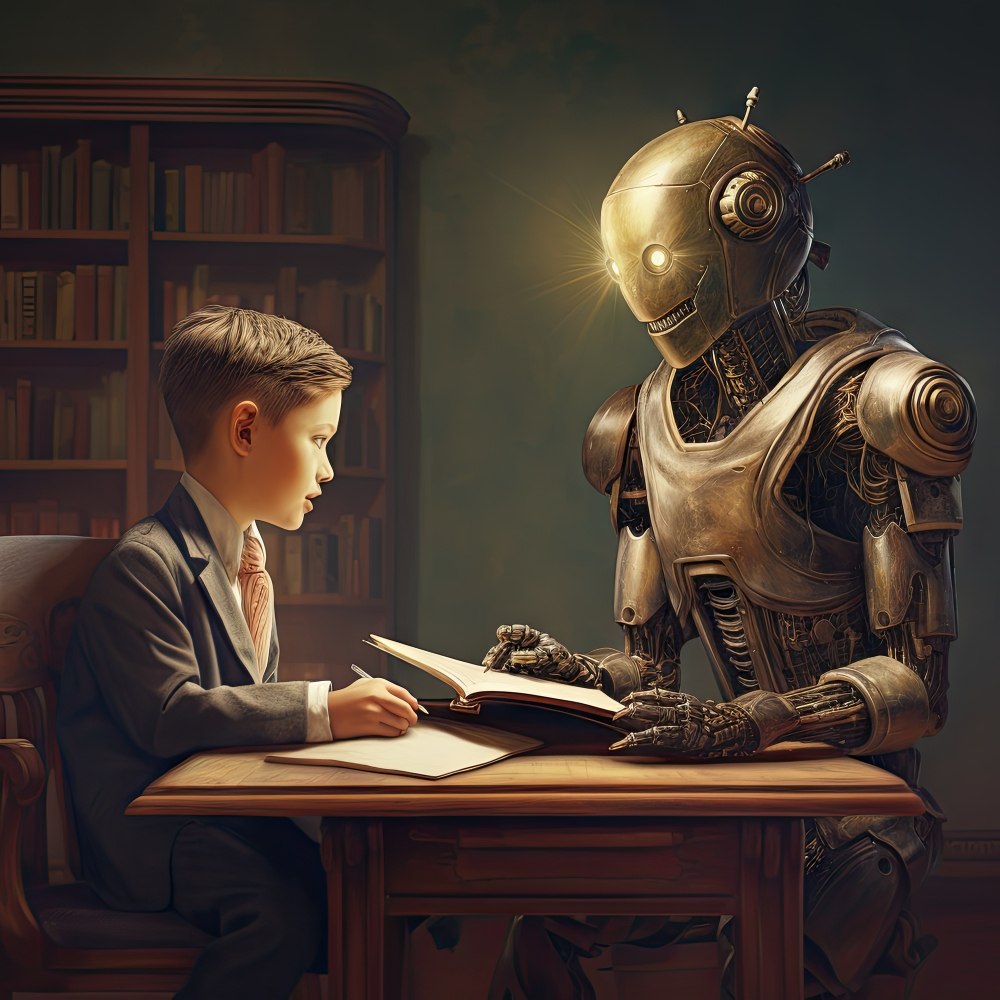
With an AI tutor, that dynamic shifts entirely. Instant answers are available at any time. Difficult concepts can be broken down and re-explained as many times as needed. Questions that feel too basic to raise in class get answered without judgment. Feedback is constant and immediate.
A McKinsey report on AI in education found that personalized learning can significantly improve student engagement and motivation precisely because it accommodates different learning speeds. This is something no single lecturer, however skilled, can do for a room of sixty students.
That difference is subtle on the surface. Underneath, it changes everything.
One of the most quietly damaging assumptions in college education is that everyone learns at the same speed. In reality, they don't. And most students know this, but they just don't have the option to do anything about it.

AI tutors break that constraint. Students can revisit a concept five times without embarrassment, slow down on the topics that don't come naturally, and ask the questions they've been holding back because they seemed too simple.
This matters more than it might appear. When learning feels safe, students engage more deeply. When they engage more deeply, confidence follows. And that confidence built quietly over repeated practice is what surfaces in interviews, presentations, and internship rooms when it counts.
The way students prepare for the working world has changed considerably.
It used to mean notes and textbooks. Now it includes active AI-assisted practice.
Students are using AI tutors to prepare for technical interviews, work through case studies, sharpen communication through mock conversations, and build clarity before pursuing internship pathways in colleges. The learning isn't passive, it is applied. And that distinction matters enormously to employers.
A study published in the Open Psychology Journal found that students who engage in interactive, applied learning environments demonstrate stronger problem-solving abilities and job-readiness than those who learned through traditional passive methods.
(Source: https://openpsychologyjournal.com/VOLUME/17/ELOCATOR/e18743501339518/FULLTEXT/)
That is precisely what AI tutors are enabling and why their impact extends well beyond the classroom.
One of the most common frustrations among recent graduates is this: "I studied everything. I still don't feel ready."
That gap between academic knowledge and real-world confidence is where AI tutors are beginning to make a genuine difference.
A marketing student can simulate campaign strategies. An engineering student can work through real-world problem sets. A finance student can explore practical budgeting scenarios that bear no resemblance to textbook exercises but feel exactly like what a first job might demand.
This aligns directly with the growing emphasis on skill-based learning programs and hands-on exposure. Learning stops being abstract and starts becoming more useful.
Career confusion among college students isn't usually about a lack of options. It is about a lack of clarity with too much information, too little structure, and no reliable way to filter signal from noise.
Students are using AI tutors to explore different career paths, understand what specific roles actually require, compare industries against their own strengths and interests, and prepare decisions tied to career guidance after 12th and beyond.
This becomes especially valuable for students considering higher education, evaluating study abroad scholarships, foreign scholarships, or exploring overseas graduate scholarship options. When information is personalized and accessible, decisions that once felt overwhelming start to feel structured and manageable.
AI tutors are also playing an increasingly significant role in helping students pursue international opportunities.
Students aiming for study overseas scholarships or full scholarships to study abroad are using AI tools to prepare for language proficiency tests, understand application requirements, practice essays and interviews, and compare universities and programs across countries.
This is where platforms like CollegeCampus add another layer of support by connecting students with the right study abroad consultants in India and providing structured access to abroad education scholarship programs. AI provides the practice ground. Platforms provide the pathway forward.
Like any powerful tool, AI tutors come with both real strengths and real limitations.
While the learning experience is personalized, doubts get resolved immediately, academic confidence improves steadily, and preparation for internships and job applications becomes sharper and more targeted, over-reliance is a genuine risk. If a student lets AI do the thinking rather than support their thinking, the outcome is passive consumption dressed up as learning. And AI, however sophisticated, cannot replicate mentorship, emotional understanding, or the kind of nuanced human guidance that shapes how a person grows.
The answer is not to avoid AI tutors. it is to use them with intention. The role of AI is to sharpen thought, not replace it.
Why This Shift Matters More Than It Appears
What's happening here is not a technology trend. It's a learning shift.
Students are moving from memorizing to understanding, from waiting to exploring, from following instructions to questioning assumptions. While the shift is quiet, it has a direct impact on how prepared students feel when they step into real-world environments for the first time.
In a landscape where internships for college students in India, employability programs for students, and practical hands-on exposure define who gets hired and who gets passed over, smarter learning has stopped being an advantage.
It's becoming a baseline expectation.
1. How are AI tutors improving learning outcomes for college students?
By offering personalized, on-demand support that adjusts to each student's pace and gaps. Concepts get clarified instantly, feedback is continuous, and the result is deeper understanding and steadily growing academic confidence.
2. Can AI tutors help with internship preparation?
Yes. This is one of their most practical applications. Students use them to practice interview questions, work through case studies, and sharpen communication skills, making them meaningfully better prepared for internships for college students in India and real workplace expectations.
3. Are AI tutors useful for skill-based learning programs?
Very much so. They enhance skill-based learning by creating interactive, applied experiences where students practice concepts in realistic scenarios by building the problem-solving and job-ready skills that employers are actually looking for.
4. How do AI tutors support career guidance during college?
They help students explore career paths systematically, understand what specific roles require, and compare opportunities in a structured way - making the decisions tied to career guidance after 12th and beyond feel less overwhelming and more grounded.
5. What are the risks of over-relying on AI tutors?
The main risk is a drift toward passive consumption by letting AI generate answers rather than using it to deepen your own thinking. Students get the most from AI tutors when they stay actively engaged: questioning, analyzing, and applying what they encounter rather than simply receiving it.

Blogs


© Copyright 2023 BeWise & Wisdom Tech Solutions. All Rights Reserved. BeWise College Campus is an initiative of Wisdom Tech Solutions Pvt Ltd focused on entrepreneurship and innovation programs for higher education institutions.